3D printed vs mass-produced plastic: the real differences, pros and cons
A 3D printed piece is built layer by layer with no mould, so it can carry your name or your plate from the very first piece. Ordinary plastic is injected into a mould, so it comes out smoother and cheaper when made by the thousand. Here's how they differ in look, feel, weight and price, and when each makes sense.
Key takeaways
- A printed piece is built layer by layer with no mould; ordinary plastic is moulded.
- Printing suits personal pieces and small quantities; moulding suits thousands.
- Fine layer lines are normal on a printed piece and don't mean it's poor.
The core difference between a 3D printed product and ordinary plastic is how it's made: a 3D printer builds the piece layer by layer from a digital file with no mould, so every piece can differ from the one before, while ordinary plastic is injected molten into a steel mould that turns out thousands of identical copies. That's why printing suits personal pieces and small quantities, and moulding suits large runs.
How each is made
- Ordinary plastic (injection moulding): a steel mould is machined in the shape of the piece, then molten plastic is injected into it under high pressure, cools in seconds and comes out finished. The mould itself is expensive and slow to make, but after that every piece is fast and cheap. Most toys and plastic tools you buy in shops are made this way.
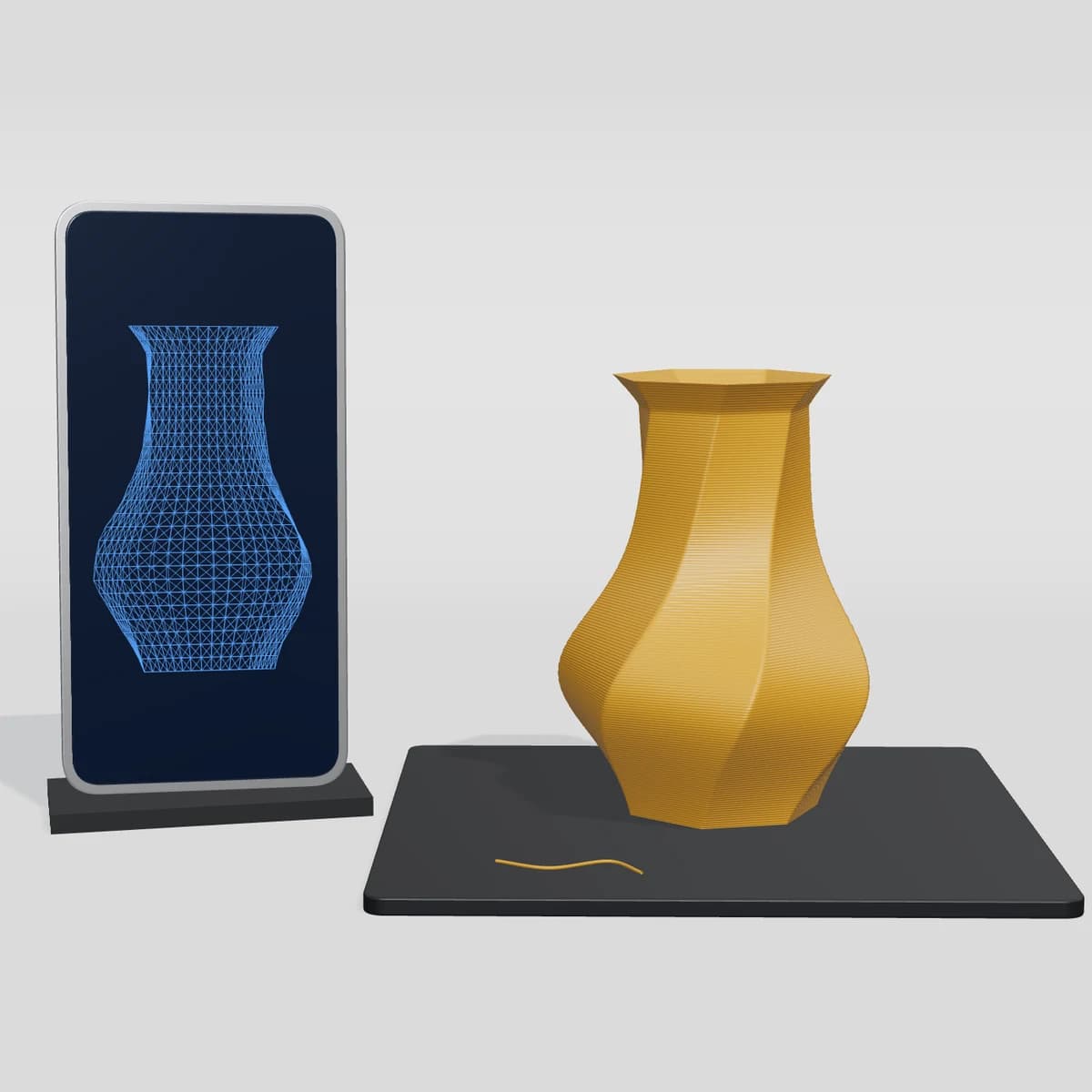
- 3D printing: it starts from a design file on a computer. The printer melts a strand of material and lays it down as a thin line, draws one layer, moves up a little and draws the next, until the shape is complete. There's no mould, so changing the name, the letters or the colour costs nothing extra.
What you see and feel
- Surface: moulded plastic is usually smooth and often glossy, because it takes the mould's finish. A printed piece shows fine lines between layers up close, and feels matte or silky depending on the material. Those lines are normal in 3D printing and don't mean the piece is poor.
- Weight: a printed piece is usually lighter, because it isn't solid all the way through: strong outer walls with an inner pattern, often like a honeycomb, that gives strength with less weight.
- Strength: a moulded piece is equally strong in every direction. A printed one is strong along its layers and a little weaker between them, so a well-designed printed piece handles everyday use, but heavy force in the wrong direction can split layers.
- Detail: raised letters, colours set into each other and moving parts print together in one go. In the Name coaster, for example, the base, the name and the ring each have their own colour in a single piece, and articulated animal keychains come off the printer with their joints already working, no assembly.
- Sameness: every copy from a mould is identical. Printed pieces can differ slightly from one to the next, in colour shade between material batches or in size by fractions of a millimetre.

Advantages of 3D printing
- One piece with your name, your car plate or your letters, with no minimum quantity.
- You see it before you order: Kun's designers show the piece in 3D in your colours before you buy.
- Printed after you order, so there's no stock sitting on a shelf for years.
- Shapes a mould struggles with: moving parts, hollow insides and pieces that fit into each other.
- You can print your own design from a file, as in Print your design.
Its drawbacks, honestly
- Slower: a piece takes minutes to hours on the printer; a moulded one takes seconds.
- Dearer in bulk: for ten thousand identical pieces, a mould works out cheaper.
- The surface is less smooth than moulded plastic, and layer lines show if you look closely.
- More sensitive to high heat than some moulded plastics, depending on the material. Details in the care guide for printed pieces.
When to choose printed, and when moulded
- A gift with someone's name, a keychain of your car plate, or a piece in colours you pick: printed.
- A piece you can't find in shops, or a simple spare part you designed: printed.
- Thousands of identical pieces at the lowest price each: moulded.
- A very glossy surface like shop-bought toys: moulded, or a printed piece in a silk material with more shine.
At Kun
Kun prints every piece itself in Saudi Arabia on a Bambu Lab A1 mini, in PLA, and some pieces in silk PLA. Pieces with your name or your design are printed after you order; fixed-design pieces we print and keep ready to ship. Start with keychains, clickers or coasters, and see how we work step by step in How Kun prints your pieces.
To tell a good print from a poor one, see How to judge 3D print quality.
Frequently asked questions
Is 3D printing plastic?
Yes, most 3D printing uses plastic materials. At Kun we print in PLA, and some pieces in silk PLA.
Why is a printed piece lighter than ordinary plastic?
Because it isn't solid all the way through: strong outer walls with an inner pattern that gives strength with less weight.
Is a printed piece weaker than a moulded one?
It's strong along its layers and a little weaker between them. A well-designed piece handles everyday use, but heavy force in the wrong direction can split layers.
When is moulded plastic the better choice?
When you need thousands of identical pieces at the lowest price each, or a very glossy finish like shop-bought toys.
Products in this guide
- NewPrint on demand
- NewPrint on demand


Related guides
- ComparisonTypes of 3D printers: a buyer's guide from filament to resin
Home 3D printers come in two kinds: filament (FDM) printers for practical, colourful pieces, and resin printers for very fine detail. Here's how they differ, the best-known printer families such as Bambu Lab, Prusa, Creality, Elegoo and Anycubic, build size, multi-colour, enclosures and nozzles, and whether you need a printer or should order prints.
- Comparison3D printing materials explained: PLA, PETG, TPU, ABS and resin
PLA for everyday pieces and gifts, PETG for pieces that take more heat and knocks, TPU for flexible parts, ABS and ASA for heat and sun, and resin for fine detail. Here's what sets each apart, how they handle heat, the special kinds of PLA, and how to choose.